Introduction
The Problem
We (as a society) are raising children in environments that defy their evolutionary design. The biological, social, and ecological foundations that support human development: air, movement, touch, risk, food, water, eye contact, stillness and nature align with the foundational layers of Maslow’s hierarchy of needs, yet they are being systematically displaced by a digitally mediated, indoor, screen-based way of life (Maslow, 1943; Louv, 2005; Naveed, Lakka & Haapala, 2020; Clean Air Fund, 2022). This shift is not just technological. It is ecological, neurodevelopmental, emotional and existential. Despite these conditions, human instincts for rest, movement, nature, boredom, and relationship remain biologically rooted and persistently re-emerge, often expressed through art and imagery suggesting a deeper, unmet knowledge of what supports wellbeing.
As Haidt (2024) and Granic et al. (2020) have argued, the dominant mode of childhood has moved from play-based, embodied exploration to sedentary, screen-based consumption with severe psychological consequences. The problem is not only how much time children spend on screens, but what that time replaces. Digital exposure displaces physical interaction, suppresses sensory learning, fragments attention, and bypasses key developmental pathways (Takahashi et al., 2023; Muppalla et al., 2023; Shapiro & Stolz, 2019). The more children outsource their experience of the world to devices, the less opportunity they have to act on their natural instincts for movement, creativity, solitude and exploration, and the harder it becomes to develop identity, emotional regulation, agency, and narrative coherence (Granic, Morita & Scholten, 2020).
The results are measurable, early exposure to screen time is now strongly associated with developmental delays in language, communication, and problem-solving (Takahashi et al., 2023), and has been flagged as a potential environmental risk factor for autism spectrum disorder (Sarfraz et al., 2023). Embodied development, the integration of sensorimotor experience, affect, and cognition is not optional: it is essential (Shapiro & Stolz, 2019; Cosentino et al., 2025). Yet the dominant schooling model privileges cognitive abstraction over physical experience, prioritising screen-based learning and behavioural compliance over curiosity, play, and connection. This reinforces the broader cultural trend of suppressing the very instincts that evolution gave us for learning and growth.
Children’s interactions with the world are increasingly disembodied, flattened into two-dimensional interfaces that offer stimulation without participation. Stewart (2016) notes that screen-centred childhoods may reduce social friction but also limit opportunities for narrative construction, identity exploration and emotional growth. This reflects a wider educational problem. Mainstream schools often reinforce sedentary, stress-inducing, abstract instruction while devaluing outdoor time, embodied learning and affective engagement (Robinson & Aronica, 2015; Shulman, 2020; UNESCO, 2023).
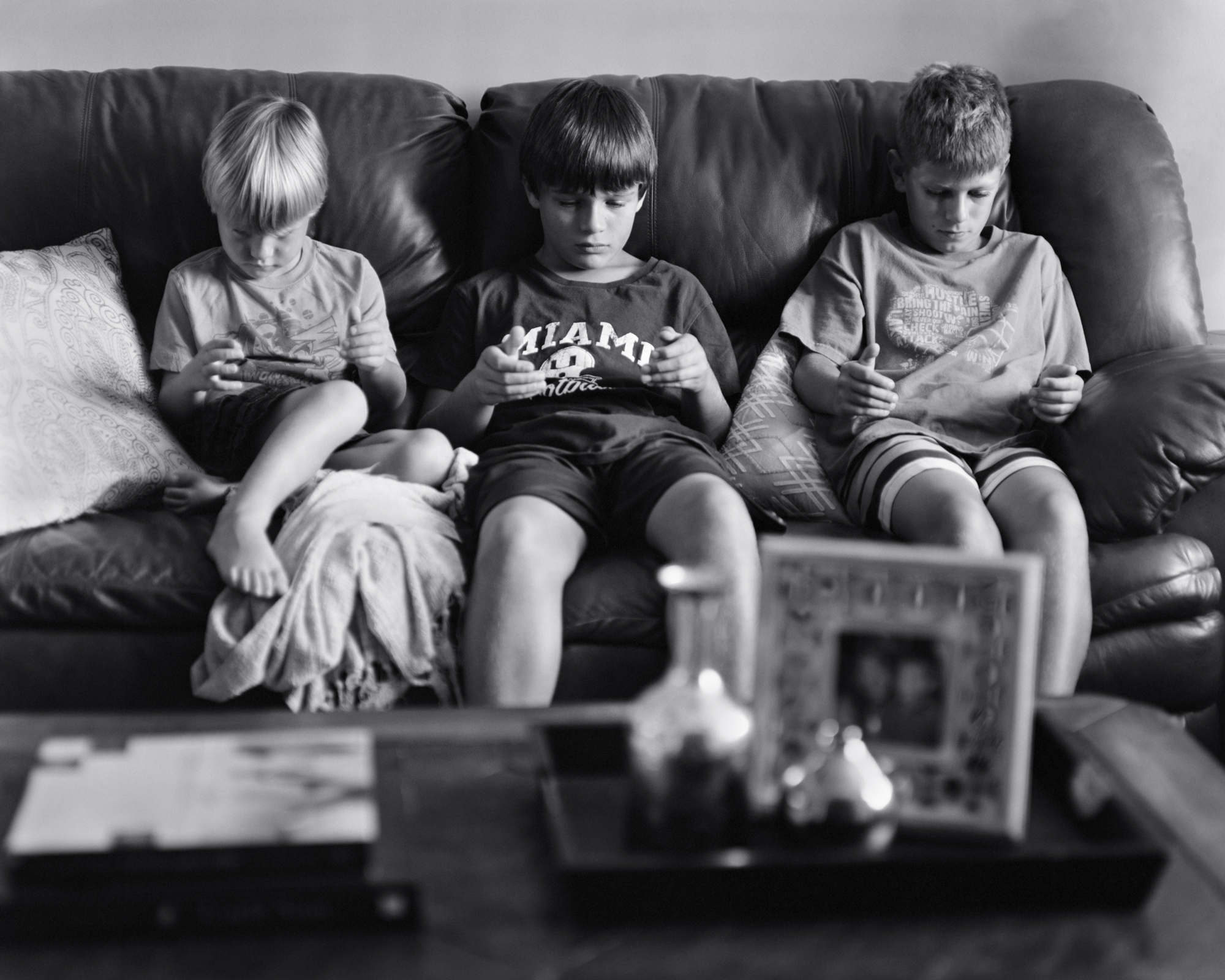
Figure 1. Image from Eric Pickersgill’s Removed (2015).
© Eric Pickersgill. Source: https://www.ericpickersgill.com/removed

Figure 2. Image from Eric Pickersgill’s Removed (2015).
© Eric Pickersgill. Source: https://www.ericpickersgill.com/removed

Figure 3. Image from Eric Pickersgill’s Removed (2015).
© Eric Pickersgill. Source: https://www.ericpickersgill.com/removed
This visual disconnection is powerfully captured in Eric Pickersgill’s photographic series Removed (2015), which shows children and families mid-screen use, but with the devices physically edited out. The resulting images reveal a shared posture of absence: heads bowed, hands empty, attention elsewhere. What should be moments of play, rest, or conversation appear hollow and inert. Pickersgill’s work reflects how screens have become so embedded in our daily lives that even their absence feels visible. It makes clear that disembodiment is not just internal or emotional, but social, spatial, and postural, a quiet, everyday erosion of presence that begins in childhood.
Psychologically, this has profound effects. When children are not grounded in lived experience through nature, bodily movement, boredom, stillness, social mirroring, and creative expression they lose access to the cues that support emotional development (Kuburic, 2023; Hill,2016). Identity formation stalls; emotional illiteracy rises. Granic et al. (2020) argue that adolescence in particular depends on narrative identity the integration of past, present and future through story. But this coherence is harder to achieve in hybrid digital realities that fragment time and collapse meaning.
At the ecological level, disconnection from nature undermines not only wellbeing but also environmental concern. Soga and Gaston (2020) call this the “extinction of experience”, the loss of embodied contact with the natural world, which leads to ecological apathy. Gatersleben (2008) and Heft (2010) show that human beings are biologically attuned to natural affordances: environments that support movement, exploration and attention restoration. Yet many children now grow up with no meaningful access to such spaces. The loss of green time is not a nostalgic concern, it is a cognitive and emotional emergency (Chawla, 2015; Dadvand et al., 2015).
Environmental psychology confirms that exposure to natural scenes improves mood, concentration, and stress recovery (Gatersleben, 2008; Kaplan & Kaplan, 1989). Affordance theory (Heft, 2010) further shows that perception itself is shaped by interaction with the physical world, not passive observation but active engagement. When schooling happens in box-like classrooms, under artificial lights, with little sensory richness or movement, it is not only boring, it is biologically misaligned.
While education plays a part, the roots of this crisis extend across all domains of childhood experience, from family and community life to the very environments in which we live. If children are denied opportunities to move, explore, nurture, create, grieve, and tell stories rooted in physical life, they are less able to become resilient, emotionally literate, or ecologically grounded adults. This is not just a mental health issue. It is a civilisational one, a crisis rooted in our failure to trust and protect what human beings instinctively know they need.
References
Chawla, L., 2015. Benefits of nature contact for children. Journal of Planning Literature, 30(4), pp.433–452.
Fund, C.A. and Climate Policy Initiative, 2024. The State of Global Air Quality Funding 2024.
Cosentino, G., Anton, J., Sharma, K., Gelsomini, M., Giannakos, M. and Abrahamson, D., 2025. Exploring children’s embodied interactions through digitally facilitated enactment: A case study when math education MOVES. International Journal of Human-Computer Studies, 201, p.103509.
Dadvand, P., Nieuwenhuijsen, M.J., Esnaola, M., Forns, J., Basagaña, X., Alvarez-Pedrerol, M., Rivas, I., López-Vicente, M., De Castro Pascual, M., Su, J. and Jerrett, M., 2015. Green spaces and cognitive development in primary schoolchildren. Proceedings of the national academy of sciences, 112(26), pp.7937-7942.
Gatersleben, B., 2008. Humans and nature; Ten useful findings from Environmental Psychology research. Counselling Psychology Review, 23(2), pp.24-34.
Granic, I., Morita, H. and Scholten, H., 2020. Beyond screen time: Identity development in the digital age. Psychological inquiry, 31(3), pp.195-223.
Hill, D., 2016. Media use in school-aged children and adolescents. Pediatrics, 138(5), p.1.
Haidt, J., 2024. The Anxious Generation: How the Great Rewiring of Childhood is Causing an Epidemic of Mental Illness. London: Allen Lane.
Heft, H., 2010. Affordances and the perception of landscape. Innovative approaches to researching landscape and health open space: People space, 2.
Kaplan, R. and Kaplan, S., 1989. The experience of nature: A psychological perspective. Cambridge university press.
Kuburic, S., 2023. It’s On Me: Accept Hard Things, Do Real Work, Find Your Way. New York: HarperOne.
Louv, R., 2008. Last child in the woods: Saving our children from nature-deficit disorder. Algonquin books.
Maslow, A.H., 1943. A theory of human motivation. Psychological Review, 50(4), pp.370–396.
Michaelson, V., King, N., Janssen, I., Lawal, S. and Pickett, W., 2020. Electronic screen technology use and connection to nature in Canadian adolescents: A mixed methods study. Canadian Journal of Public Health, 111(4), pp.502-514.
Muppalla, S.K., Vuppalapati, S., Pulliahgaru, A.R., Sreenivasulu, H. and kumar Muppalla, S., 2023. Effects of excessive screen time on child development: an updated review and strategies for management. Cureus, 15(6).
Naveed, S., Lakka, T. and Haapala, E.A., 2020. An overview on the associations between health behaviors and brain health in children and adolescents with special reference to diet quality. International Journal of Environmental Research and Public Health, 17(3), p.953.
Pickersgill, E., 2015. Removed [photographic series]. Available at: https://www.ericpickersgill.com/removed [Accessed 27 Jul. 2025].
Robinson, K. and Aronica, L., 2015. Creative Schools: Revolutionizing Education from the Ground Up. London: Penguin.
Sarfraz, S., Shlaghya, G., Narayana, S.H., Mushtaq, U., Ameen, B.S., Nie, C., Nechi, D., Mazhar, I.J., Yasir, M. and Franchini, A.P.A., 2023. Early screen-time exposure and its association with risk of developing autism spectrum disorder: a systematic review. Cureus, 15(7).
Shapiro, L. and Stolz, S.A., 2019. Embodied cognition and its significance for education. Theory and Research in Education, 17(1), pp.19-39.
Soga, M. and Gaston, K.J., 2020. Extinction of experience: The need to be more specific. People and Nature, 2(3), pp.575-581.
Stewart, N.K.B., 2016. As Seen on Screen: A Virtual Ethnographic Study of Children’s Screen Time.
Takahashi, I., Obara, T., Ishikuro, M., Murakami, K., Ueno, F., Noda, A., Onuma, T., Shinoda, G., Nishimura, T., Tsuchiya, K.J. and Kuriyama, S., 2023. Screen time at age 1 year and communication and problem-solving developmental delay at 2 and 4 years. JAMA pediatrics, 177(10), pp.1039-1046.
Twenge, J.M., 2017. The Costs of overprotecting the young-iGen: Why Today’s Super-Connected Kids Are Growing Up Less Rebellious, More Tolerant, Less Happy-and Completely Unprepared for Adulthood-and What That Means for the Rest of Us. Journal of Psychology, pp.1-13.
UNESCO, 2023. Technology in Education: A Tool on Whose Terms?. Paris: United Nations Educational, Scientific and Cultural Organization.